
The scramble for critical minerals: An old curse in a new world
August 10, 2026


.jpg)


Its objectives are to:
The global economy is undergoing a phase of sustained geopolitical fragmentation, marked by intensifying conflicts, rising strategic rivalries and the reconfiguration of global value chains.
In this context, strategic natural resources—notably critical minerals linked to the energy transition and digitalisation—play a central role in international economic and security dynamics.
For many developing countries, particularly in Africa and fragile regions, the coexistence of a large agricultural sector and abundant extractive resources constitutes both:
The Chair provides an integrated analysis of these issues, at the intersection of macroeconomics, natural resource economics and the analysis of financial and geopolitical risks.
Research priority 1 – Macroeconomics and Shock Management
Analysis of fiscal and budgetary policies in developing countries in response to external shocks, with a focus on domestic resource mobilization, public spending efficiency, price regulation of key commodities (petroleum products and food), as well as the digitalization and decarbonization of economies (North–South relations, demand for critical minerals).
Research priority 2 – Natural Resources, Agriculture and Critical Minerals
Integrated analysis of the agricultural sector and extractive industries, including the distribution of natural resource rents (taxation, contracts, etc.), interactions between agriculture, mining, and land use, food security (price- versus quantity-based policies), and economic diversification through value chains.
Research priority 3 – Geopolitical Risks, Security and Macroeconomic Vulnerabilities
Examination of geopolitical risks, macroeconomic vulnerabilities, and their impact on growth, alongside analysis of investment flows, public finances, and supply chains for strategic resources.
In the article "Superpowers want to control critical mineral supplies – local communities need a stronger say", published in Nature, Rabah Arezki highlights the growing geopolitical tensions surrounding critical minerals and argues for stronger involvement of local communities in decisions regarding resource exploitation.
In 2025, Yannick Bouterige also contributed to the African Legal Support Facility (ALSF) report Reinventing Mining Partnerships in Africa, which provides practical recommendations for strengthening production-sharing agreements and mining partnerships for the benefit of African countries.
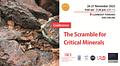
On 26–27 November 2025, FERDI, Cerdi, the University of Oxford and the Oxford Review of Economic Policy organised the international conference "The Scramble for Critical Minerals".
The conference brought together researchers, policymakers, international organisations and private-sector representatives to discuss the economic, geopolitical and environmental challenges associated with critical minerals. Discussions focused on securing supply chains, resource governance and taxation, as well as on the conditions required for producing countries to derive lasting benefits from their natural resources. The conference will contribute to a special issue of the Oxford Review of Economic Policy.
Building on its research activities, the Chair contributes to the development of an IHEDD-FERDI training programme on extractive taxation, mineral rent-sharing and natural resource governance. These courses are designed to strengthen the capacities of public administrations and practitioners involved in the management of strategic resources.
FERDI has also developed a Mining Taxation Database for Africa, which documents the tax regimes applicable to industrial gold mining in 22 African producing countries. It includes a simulation tool for analysing the sharing of mining rents between governments and investors, providing a valuable resource for research, training and public policymaking.

).png)