Nouvelles dynamiques autour de l’économie numérique : la numérisation au service de l’emploi agricole et de la transformation rurale dans l’UEMOA
June 02, 2026
The Chair's research pursues four main objectives:
Research priority 1 – Digital infrastructure and connectivity
The Chair examines how digital infrastructure shapes African economies, with a particular focus on submarine cables, telecommunications networks and internet connectivity. Its research explores how these infrastructures influence prices, competition, service quality and regional economic integration.
Research priority 2 – Digital transformation and development
Research investigates the links between digital innovation, economic growth, financial inclusion, employment, trade and structural transformation. It also examines how digital technologies can support agricultural modernisation and the development of rural economies.
Research priority 3 – Digital identification and governance
The Chair analyses digital identification systems and digital public infrastructure, assessing their implications for access to public services, social protection, financial inclusion and data governance.
The Chair's research advances understanding of digital transformation in developing countries and provides evidence to inform public policy.
In 2025, Joël Cariolle, Michele Imbruno and Jaime de Melo published "Digital Connectivity and Firm Participation in Foreign Markets: An Exporter-Based Bilateral Analysis" in the Journal of Development Economics. The article demonstrates how the deployment of submarine cables enhances firms' participation in export markets.
Joël Cariolle also authored "Digital Disasters: The Macroeconomic Costs of Submarine Cable Breaks", which examines the economic consequences of submarine cable failures. The study shows that such disruptions have lasting effects on economic growth, investment, productivity and trade in digitally delivered services, while generating spillover effects across neighbouring economies. These findings underline the strategic importance of digital infrastructure and the need to strengthen its resilience.
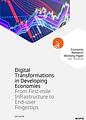
The Chair's research has also resulted in two major reports:
The Chair also contributes to the work of the World Intellectual Property Organization (WIPO) on the role of digital connectivity in development, while supporting a broader research agenda on digital transformation in developing economies.
Finally, it is involved in a pilot project in Niger led by Jenny Aker (Cornell University), which explores how mobile payments can strengthen the financial inclusion of farming households.
The Chair actively engages with international research networks and regularly shares its findings with policymakers and development practitioners.
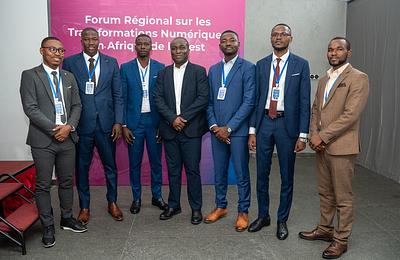
In 2026, FERDI contributed to the organisation of the West-African Digital Transformations Forum, dedicated to inclusive digital transformation. The conference brought together researchers, policymakers, international organisations and development partners to discuss the role of digital technologies in transforming African economies.
The Chair's research is also disseminated through international conferences, academic seminars and policy dialogues focusing on digital policies, telecommunications and digital development.
The Chair's research informs the training activities delivered by IHEDD-FERDI and helps strengthen expertise among public administrations, regulatory authorities and development practitioners.
Drawing on the Chair's research, these training programmes cover data science, data analytics, geospatial analysis and artificial intelligence, equipping public institutions with the knowledge and skills needed to design and implement evidence-based digital policies.