International Taxation: What Still Holds in a Fragmented World

International taxation was long limited to bilateral tax treaties that divided up taxing rights between states and included transfer pricing rules. Originally designed a century ago for a tangible, physical economy, this framework has been weakened by globalization, financialization, and the digitalization of the economy, which have fostered tax competition and optimization strategies. Since the 2008 crisis, a form of “fiscal regulation of globalization”, driven by the G20 and the OECD, has made possible significant progress concerning transparency, the fight against tax evasion and tax base erosion, and the introduction of a global minimum tax. In an increasingly fragmented geopolitical environment, the sustainability of this cooperative tax infrastructure is now in question, particularly the global minimum tax. The recent agreement granting the United States special treatment illustrates both the resilience of the system and its asymmetries, while also pointing to the risk of a return to unilateral approaches.
Citation

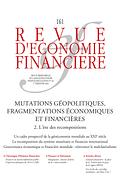
 Saint-Amans P. (2026) "International Taxation: What Still Holds in a Fragmented World", Revue d’Économie Financière Vol. 161 " Geopolitical Shifts, Economic and Financial Fragmentation. Volume 2. The Era of Restructuring", 270 p., April 2026 

Publications
All publications