La Zone de libre-échange continentale africaine (ZLECAf) et le développement industriel en Afrique : Quel constat sur 5 années (2019-2024) de mise en œuvre ?
September 15, 2026


For more than fifteen years, FERDI has been producing leading research on regional integration in Africa, with a particular focus on the Franc Zone and the African Continental Free Trade Area (AfCFTA). Its work assesses the impact of regional integration on economic growth, vulnerability reduction, trade and regional public policies.
This research is conducted in partnership with the WAEMU Commission, the CEMAC Commission, the Banque de France and the African Development Bank, with the aim of supporting regional policymaking and strengthening economic integration across Africa.
FERDI examines the conditions that enable African economies to integrate more effectively into regional and global value chains. Its research focuses on trade facilitation, trade policy, environmental goods and the implications of the green transition for international trade.
Trade in Environmental Goods
FERDI advocates a coordinated reduction of tariff and non-tariff barriers affecting trade in environmental goods in order to support the green transition and strengthen Africa's trade integration.
Further reading: de Melo, J. (2025). How Can the African Continental Free Trade Area Help Green African Trade? FERDI Working Paper P355.
Trade Facilitation
Several articles on the implementation of the WTO Trade Facilitation Agreement (TFA) have been published in peer-reviewed journals and specialised policy platforms. FERDI's research highlights the key role that effective implementation of the Agreement can play in maximising the benefits of the African Continental Free Trade Area (AfCFTA).
Further reading: De Melo J., Sorgho Z., Wagner L. (2024) «Implementing the Trade Facilitation Agreement should boost trade among African Continental Free Trade Area members», Ferdi Policy Brief B264, February.
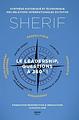
In 2025, Jaime de Melo (University of Geneva, FERDI) published a book in the FERDI series examining the dynamics, constraints and future prospects of regional integration in Africa. Drawing on analyses covering the period from the launch of Agenda 2063 – The Africa We Want to the establishment of the African Continental Free Trade Area (AfCFTA), the book explores the economic conditions required for regional integration initiatives to succeed.
It highlights the structural constraints that continue to hamper productive transformation, including premature deindustrialisation, high labour costs relative to income levels and underdeveloped non-tradable sectors. It also examines the institutional and policy choices shaping regional integration, notably rules of origin, trade facilitation and mechanisms for addressing disparities between countries.
The book argues for a pragmatic approach to regional integration centred on the provision of regional public goods—including infrastructure, energy, transport and health—as a prerequisite for deeper and more sustainable market integration across Africa.
FERDI analyses the role of exchange-rate policies in shaping the competitiveness of developing economies and their integration into global value chains. This research contributes to a better understanding of the factors that promote export diversification and productive transformation across Africa.
In 2025, Patrick Plane (Cerdi, Université Clermont Auvergne, FERDI) continued his research on the role of the real exchange rate by distinguishing its effects on participation in global value chains from its impact on African export performance.
A first article, published in the Review of World Economics — "Unravelling the Nexus Between Exchange Rate Undervaluation and Global Value Chains Participation" (with M. Abdou, C. Zaki and I. Elbadawi) — draws on EORA data covering 143 countries between 1995 and 2018. The findings show that exchange-rate undervaluation encourages participation in both the upstream and downstream segments of global value chains. This effect is reinforced by digitalisation and is particularly pronounced in countries with weaker institutional environments.
A second article, published in The World Economy in 2025 — "Exchange Rate Undervaluation and African Surges" (with C. Da Piedade and L. Jacolin) — identifies 96 episodes of export acceleration across 41 African countries between 1995 and 2017. The authors show that product-specific exchange-rate undervaluation significantly increases the likelihood of an export surge.
By highlighting the interactions between exchange-rate policies, value chains, institutional quality and digitalisation, these studies provide new insights into the conditions required to strengthen competitiveness and support productive transformation in African economies.
Through its research and long-standing partnerships with Africa's leading regional institutions, FERDI contributes to a better understanding of the conditions required for regional integration to foster growth, resilience and economic transformation. Its analyses inform public policies, support regional organisations and contribute to international debates on the future of economic integration in Africa.