The 10th Dakar International Forum on Peace and Security

April 20, 2026 > April 21, 2026, Dakar

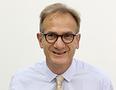
Jean-Marc Gravellini, Head of the Ferdi Chair for Agricultural Modernization Policies in Africa, participated in the 10th Dakar Forum on Peace and Security.

In short

The 10th edition of the Dakar Forum, held for the first time solely by Senegal without French co-organization, took place on April 20-21, 2026, under the theme "Africa Facing the Challenges of Stability, Integration, and Sovereignty." The event gathered over 700 participants from about 60 countries and included a high-level panel, two plenary sessions, and six thematic workshops.

The Forum concluded with the adoption of the "Dakar Doctrine" on conflict prevention, emphasizing that peace processes in Africa must be designed and led by Africans themselves, without excessive external reliance.

The discussions were marked by lively debates, particularly between Malian Minister Abdoulaye Diop and Professor Maurice Dione of Gaston Berger University, highlighting contrasting views between certain Sahelian diplomatic positions and perspectives from the African academic world, often based on democratic principles.

Forum Organization

The Forum opened on Monday, April 20, at CICAD (Diamniadio), chaired by President Bassirou Diomaye Faye, with the participation of Julius Maada Bio (Sierra Leone, current ECOWAS Chair), Mohamed Ould Cheikh El Ghazouani (Mauritania), and Prime Minister Ousmane Sonko. For the first time since its creation in 2014, following the Élysée Summit, the Forum was organized solely by the CHEDS, without French co-leadership—a highly symbolic shift that sparked much discussion.

In his opening speech, President Faye emphasized a strong sovereignist position:

"We must no longer accept that our security agenda is defined elsewhere; that our priorities are dictated by foreign interests." — Bassirou Diomaye Faye, opening of the Forum

"Extract here, process here, and sell at a fair price. May this edition be one of maturity and action." — Bassirou Diomaye Faye

Day 1

The high-level panel and Plenary Session 1, titled "Sovereignty and Contemporary Challenges," presented two complementary perspectives. Mauritanian President Ghazouani outlined a conceptual framework, redefining contemporary sovereignty as "the ability of states to manage their dependencies, reduce vulnerabilities, and strengthen resilience" in areas such as food, energy, water, digital, and health sovereignty. In contrast, Malian Minister Abdoulaye Diop delivered a more political address, outlining the conditions for regional security cooperation. He emphasized pan-African solidarity with the authorities of the Economic Community of West African States (ECOWAS), condemned alleged foreign interference, and denounced the presence of forces he considered hostile to ECOWAS in coastal countries. 

Day 2

Tuesday morning’s plenary session featured a deliberately diverse panel, including Liberata Mulamula (AU Special Envoy for Women, Peace and Security), Mémounatou Ibrahima (President of the ECOWAS Parliament), Ambassador Abdel-Fatau Musah (ECOWAS Commissioner for Political Affairs, Peace and Security), Lazare Ki-Zerbo (CIJKAD), Chadian MP Monique Mayala Ngaralbaye, and notably, Richard Michaels, Assistant Secretary for African Affairs at the US Department of State, the only high-level Western representative on the panel.

The session highlighted two contrasting approaches to regional integration: one focused on standards and institutions, championed by ECOWAS representatives, and another centered on sovereignty, advocated by certain Sahelian delegations.

While no official announcement of a rapprochement or reconciliation between ECOWAS and the AES was made, the joint participation of representatives from both groups on the same panel was seen by the organizers as a significant feature of the Forum.

Thematic Workshops

Workshops 1 and 2 – Digital Sovereignty; Natural Resources and Governance, featuring a notable warning from Solange Bandiaky-Badji (Rights and Resources Initiative) about the unprecedented "geopolitical rush" for Africa’s resources.

Workshop 3 – Political Transitions, Institutional Sovereignty, and State Legitimacy (Prof. Alioune Badara Fall, Prof. Jean-Emmanuel Pondi, Ibrahima Kane/OSF).

Workshop 4 – Defense Industry and Geostrategic Effectiveness for Africa. A notable presence from General Aimé Barthélémy Simporé (National Center for Strategic Studies of Burkina Faso, AES) alongside General Babacar Gaye (former Senegalese Cemga) and General Mohamed Znagui (former G5 Sahel).

Workshop 5 – Multinational Forces, Ad Hoc Coalitions, and Operational Sovereignty (Maman Sambo Sidikou, General Mactar Diop, Diyé Ba). Discussions focused on the operationalization of African standby forces.

Workshop 6 – The Expansion of Terrorism from the Central Sahel to Coastal States, with Lori-Anne Théroux-Bénoni (ISS), Isabel Henin (German Foreign Ministry Sahel Envoy), Mahamoudou Savadogo, and Aly Tounkara.

At this stage, the detailed recommendations for each workshop have not been published; they will appear in the official proceedings of the CHEDS. However, the Forum's closing speech highlighted a common thread running through the discussions.

Summary and Conclusions of the Forum

A flagship initiative proposed by President Faye and outlined in the final recommendations, the Dakar Doctrine seeks to replace the emergency intervention approach that characterized the Barkhane decade with a more proactive strategy. It is built around three core principles:

1. Addressing root causes, including insecurity, exclusion, and the breakdown of the social contract; 
2. Operationalizing African standby forces with stable, African-controlled funding; 
3. Promoting economic sovereignty through local resource processing and the AfCFTA. 

Its full scope is yet to be defined, as no funding mechanisms or implementation timeline have been announced. As it stands, the Dakar Doctrine serves more as a conceptual framework than a detailed operational plan.